For several years, I’ve wanted to find ways to grow more of our food outside the “normal” growing window. We always have an abundance of homegrown food from the late spring, through summer and into the early and even mid-fall, but once the first frost hits, we are typically done until the following spring. I found much inspiration in what Eliot Coleman was doing on Four Season Farm in Maine, US. Coleman has published several books, one of which intrigued me, titled “The Winter Harvest Handbook.”
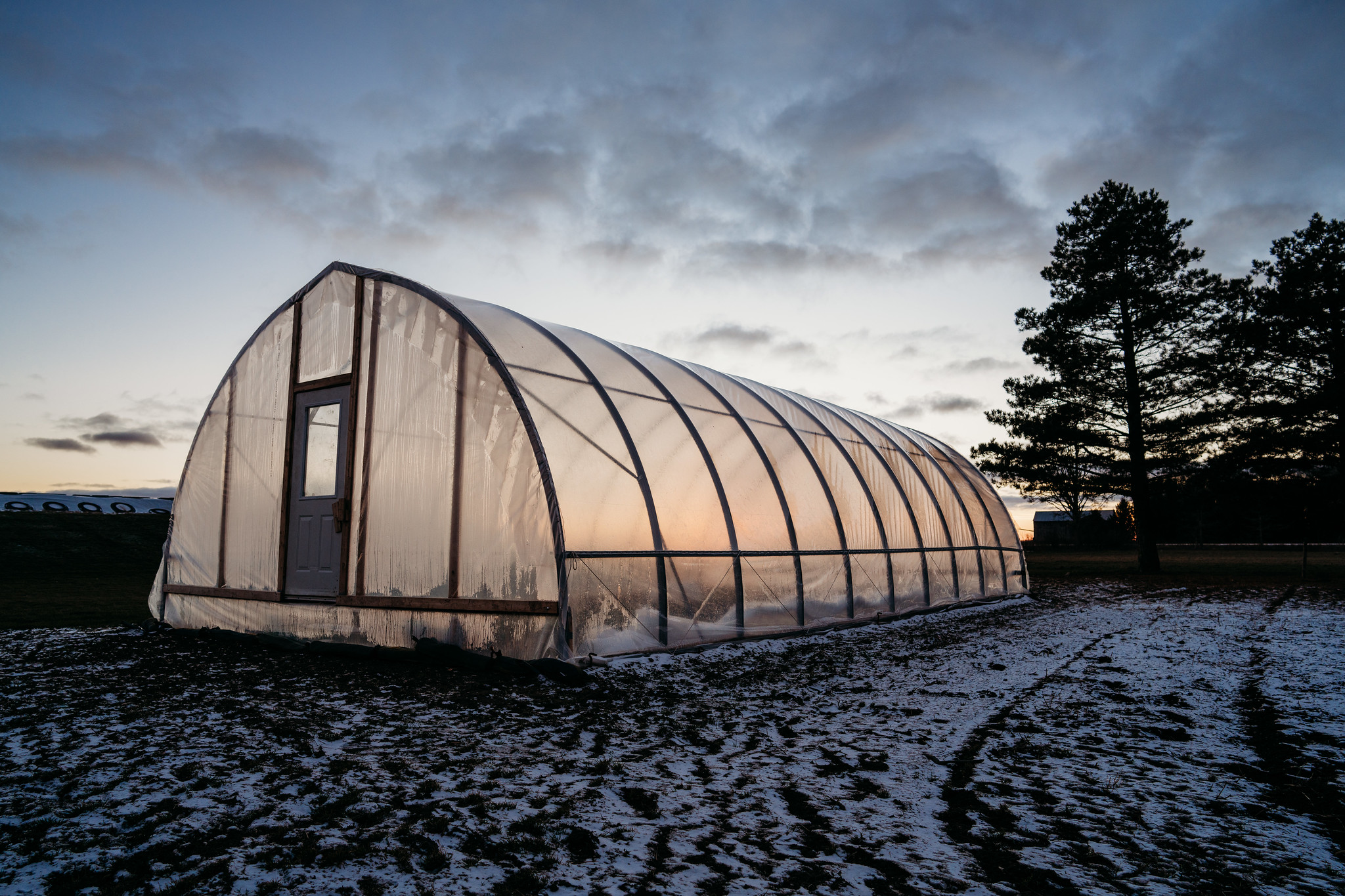
While considering several options for winter growing, we ultimately decided on an unheated tunnel utilizing only natural light. We purchased and assembled our tunnel in 2022 and had our first winter season of fresh greens, carrots, and other cold-hardy vegetables that year. It was an experimental year, but I have learned that likely every year will have elements of experimentation, which is some of the fun. This year, 2023-2024, we included several winter hardy herbs in the greenhouse, and we will continue to try new things each year.

Here are a number of the reasons why we choose to go this route:
- Our food is being grown from the soil’s nutrients and the sun’s energy — this was very important to me and the biggest reason we went in this direction. While we cannot grow winter strawberries and tomatoes, that is alright with me. I would rather us eat seasonally and enjoy the literal fruits of the warmth of summer in their proper seasons and be nourished by cold-hardy produce in the winter.
- We know exactly how our food has been grown. It’s as organic as it gets. No artificial ingredients, sprays, herbicides, nothing. My heart poured into every hour of growing this food to nourish my family.
- We eat as fresh as possible; this is a farm-to-table setup. I cut our greens as needed, and we eat them while they are only hours fresh and still fully alive. Besides my walk from the greenhouse to the kitchen, no transportation is necessary. Our food doesn’t sit in climate-controlled refrigeration for weeks before it arrives at our table.
- Growing food outside in the soil, as it is meant to be grown, allows me to connect to the earth and see the life it holds even in the ‘dead’ of winter. There are so many gifts to be found in our natural world, and I’m grateful for all of them.

If you are interested in learning more, I’d highly recommend Eliot Coleman’s book “The Winter Harvest Handbook.” Everything I have done has been based on the information he shares in that book. Once I devoured that book, I decided the best way to “figure it out” further was to dive in and start growing. Now, in our second winter of growing, we have rounded out the varieties of greens to include a nice “mixed lettuce blend” all winter and an abundance of carrots we pull as needed. As mentioned above, in our second year, we decided to experiment with some hardy winter herbs, some of which didn’t survive, and that’s okay.
I cannot wait to continue experimenting over the years and sharing the knowledge we acquire! This has been such a passion project brought to life, and I love sharing with others what we can grow in Southwestern Ontario, Canada, in the winter!

