
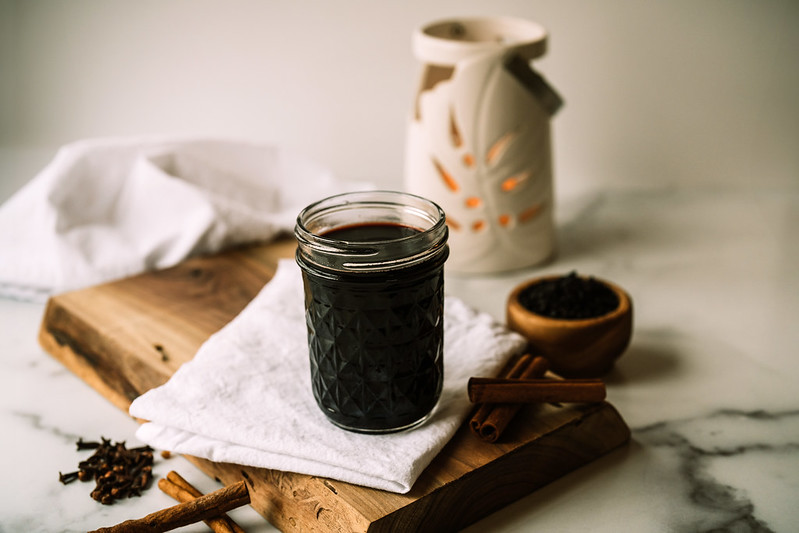
I have admittedly been late to the elderberry syrup game, but I’m glad I caught on when I did! Better late than never, right? Elderberry syrup has become well known for its ability to stimulate the immune system, which may help prevent colds and the flu and speed up recovery if you find yourself fighting a cold or the flu.
With elderberry syrup and any herbal remedy, my philosophy is that they should never be used as a bandaid for other health issues. If you find yourself getting sick regularly, this could be your body’s way of signalling that there is something out of balance in your diet or lifestyle. Always ensure you eat a diet full of nutrients and limit the amount of inflammatory foods you consume, especially refined sugar. Also, ensure you get proper sleep, as this is your body’s time to restore itself. It is so essential that your body has this time to detox and recover each night.
When all the boxes feel like they have been checked, elderberry syrup is an excellent tool for cold and flu season. It not only smells fantastic when you make it, but it also tastes great. Our family mostly has a spoonful as needed, but it would also be delicious in yogurt or a warm cup of tea.
There are many elderberry syrup recipes out there, and they are all very similar. There is a reason the same ingredients are used in all the variations of the syrup recipe. Let’s first look at some of the common ingredients and why they have been intentionally included in this syrup.

Elderberries (Sambucus canadensis or S. nigra)
Elderberries are anti-inflammatory, powerful antioxidants, antiviral, and immune stimulants. However, the bark, leaves, roots, seeds, and unripe berries should not be consumed in any manner as they are considered toxic. Even ripe berries should be consumed in minimal quantities. When the berries have been cooked, they are safe to consume. Drying the berries reduces the glycoside content.
Cinnamon (Cinnamomum aromaticum)
Cinnamon has anti-inflammatory, antiviral, and antibacterial properties, and it also includes many antioxidants.
Ginger Rhizome (Zingiber officinale)
Ginger is traditionally known for its digestive system benefits but is also a powerful immune stimulant. It is an anti-inflammatory, antiviral, antimicrobial, and circulatory stimulant. Ginger may stop upper respiratory infections when used at the first signs of a viral infection.
Clove (Syzygium aromaticum)
Cloves are also full of antioxidants and have anti-inflammatory properties. Their subtle flavour, combined with the cinnamon and ginger, also rounds out the syrup’s taste.
Echinacea Root (Echinacea angustifolia)
Echinacea is an immune-stimulating herb. It is best used at the onset of a cold, the flu, or other sinus, lung, and throat infections. It is also beneficial for upper respiratory infections.
Honey (Unpasteurized, local when possible)
Unpasteurized honey also has massive benefits that make it a perfect sweetener in this syrup. It is antibacterial, anti-inflammatory, and a good source of antioxidants. Studies show that honey can soothe a sore throat and cough, boost the immune system, and improve the recovery time of upper respiratory infections.
Adults can take 1 tablespoon up to 3 times per day. Older children can take 1 teaspoon up to 3 times per day. * Not to be consumed by children under the age of one.
Ingredients
Instructions

