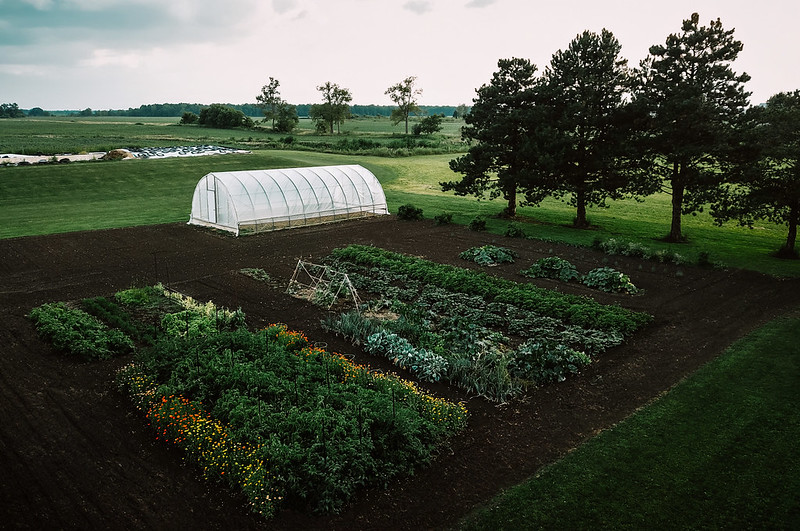
We are in the midst of our busiest season, which also means we have an abundance of produce! Each trip to the garden yields a ton of variety and volume. This is, without a doubt, the best time of the year when you focus on eating seasonally! There is plenty of produce to enjoy in August, including onions, zucchini, green beans, herbs of all varieties, tomatoes, and peppers. Potatoes and sweet potatoes are also coming along, and the raspberries are slowly starting to bear fruit. I am also harvesting small amounts of elderberries this year and picking them at peak ripeness from the bush.
In addition to our garden, the local orchards are full of peaches, the first apples are coming along, and sweet corn is abundant at all the local farm stands. I have been canning fruit and tomato sauce, dehydrating herbs, and blanching and freezing green beans. Overall, I don’t feel like I can or freeze an abundance of fruits and vegetables, just enough to give us some variety over the winter months when we cannot get in-season fruit or tomatoes right from the vine. We tend to focus on what grows well in the winter, the cold-hardy plants, and eat seasonally around those offerings. Eating seasonally allows us to eat foods at peak nutrition while they are simultaneously the most alive.

This year’s garden has been what I would call a success. Over the years, I have grown my garden through various stages of pregnancy and nursing, with newborns and toddlers in tow — which makes things a bit more challenging. This year, my youngest is old enough to help with small jobs and is less apt to hold me back when I have much work to do. I feel like the extra attention I can give to the garden has shown, and I’ve been excited to see it flourish this year. When you aim to eat as seasonally as possible, having a great garden makes this a fun and rewarding process!
Garden Zones and Crop Rotation
I thought I’d take a moment to share how I divide up my garden. I always struggled with crop rotation because I considered each crop individually. But now, I break the garden into growing zones. This is the most helpful way of viewing the garden for crop rotation. I currently have five zones. One zone includes potatoes and sweet potatoes. Another zone is our pumpkin patch (in previous years, it has also included butternut and acorn squash). Tomatoes make up a third zone. I always include calendula, basil, and peppers in my tomato zone. My fourth zone includes my onions, zucchini, parsley, chives, dill, Brussels sprouts, cucumbers, nasturtium, and watermelon. And finally, my last garden zone includes various varieties of lettuce, green beans, carrots, and peas.
I keep what is in each zone the same over the years and rotate my zones throughout the garden. For example, the tomato zone won’t go where the potato zone is this year, or vice versa. Ideally, the tomato zone will go where the beans, lettuce, carrots, and pea zone is located. I try to keep things simple, and while it may not be perfect, this system does seem to work for me.

I have a few things to address in the garden before my garden zone crop rotation will work how I envision it. This summer’s rain has made it clear that I have several low spots in the garden that are slow to dry up. The livestock barn beside the garden lacks an eaves trough, which I hope we can add before next summer. This slight improvement would limit all the rain from the roof to one spot in the garden. I plan to plant more grass as soon as it is dry enough, which will help capture rainwater when we have big downpours. Also, it is somewhat off-topic, but I plan to allow the chickens access to that grass as a free-run area. All this to say, where the tomatoes are supposed to go next year may have to change. The spot they should go has been much too wet in its current state. I hope a few improvements to the space will allow the zones to make an effortless rotation each year.
Fall Garden Preparation
Once the ground dries up a bit more, I will transfer a few zucchini and cucumber seedlings I planted a few weeks ago into pots. Our family enjoys fresh zucchini, and I want to experiment with how late we can push them into the fall. To be clear, we have not kept up with the zucchini in our garden, but I am disappointed every year when it is finished. I feel there is potential to have fresh zucchini well into the fall. Cucumbers are similar to us — we thoroughly enjoy them and miss them when the last one has been eaten. Also, we have been struggling again this year with squash bugs. I was good early in the season to stay on top of the issue, but now I’ve admittedly let it go, and it’s become a problem. So, these seedlings will not be planted in our garden but rather in a corner of one of our certified organic farms. There is a spot that is hard to plant with our large farm equipment, but my small garden tractor will fit in just fine.

As summer produce is in full swing, I have also started to prepare our fall and winter garden sites. I planted our first round of winter carrots on August 10 and 15. Planting in early to mid-August has always been the plan, but it has yet to work out that way. For the last two years, we have harvested very small carrots for the first part of the winter. They should be closer to full-sized carrots so we can enjoy them sooner. In addition to the carrots, I have some scallion seeds I’d like to plant later this week. It will be my first time trying scallions (or green onions), so I will start with a small area.

I will be succession planting some bok choi in early September. My kids don’t love it, but Erik and I enjoy it, so I’ll grow a small patch. Then, weather-dependent, by mid-September, I’ll be planting the various greens we want in the winter. I always do a large section of spinach, which is easy to throw into salads, smoothies, pasta dishes, and stir-fries. I will also ensure we have an excellent variety of baby greens for salads to enjoy all winter.
Conclusion
If you’ve made it this far, thank you! I appreciate you taking the time to read about our process of growing food in our garden and our goal of eating seasonally. I hope the brief explanation of how I view my garden in zones will help you with crop rotation next year. Thinking of which plants grow well together and keeping those plants together year after year really simplified this for me. I hope you all enjoy the season of abundance with local produce, whether growing it yourself or supporting your local farmers!


