
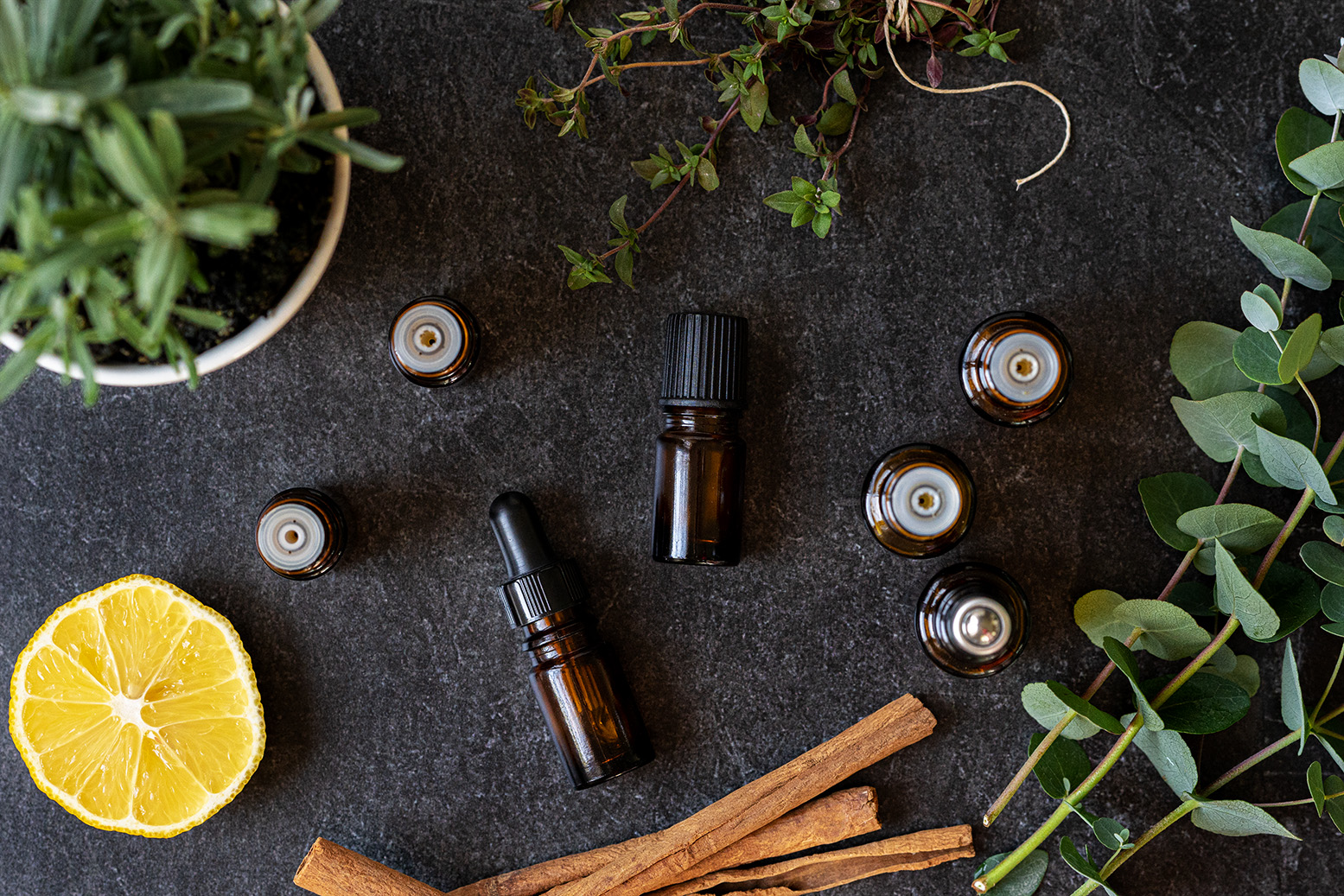
I have developed a huge love for essential oils, but if you had asked me just several years ago what essential oils actually are, I’d probably have said, “a nice smelling liquid in a small bottle”, while looking to you to hopefully give me some indication if I was on the right track or not. While that would have been a start, they are far more than just pretty aromas. Since I hope to bring a lot of essential oil information to this blog in the form of education and recipes, I figured I’d better start at the beginning so we are all on the same page as we dive in further to the wonderful world of essential oils!
WHAT ARE ESSENTIAL OILS?
Essential oils are very highly concentrated plant extracts. These plant extracts contain many complex molecules that not only make up each plant’s unique aroma, but also have the ability to physiologically and/or emotionally affect change in the body. So while at the simplest level, essential oils are bottles of liquid that smell good, they are definitely much more than that!
Essential oils are extracted from the flowers, roots, barks, shrubs, leaves, and/or seeds of a plant. Extraction is done in a number of ways, with the most common being steam distillation. This process of distillation takes large volumes of plant material and concentrates them into very small amounts of essential oils.
Unlike vegetable oils, also known as carrier oils in the world of aromatherapy, essential oils are not greasy to the touch and are highly volatile, meaning, they evaporate quickly. However, they do dissolve nicely into a carrier oil and the carrier oil also slows down the rate of evaporation of the essential oils, making this a nice combination to use on the skin.
A really high quality, properly distilled essential oil will have many therapeutic benefits, and in my opinion, this is where it gets really exciting! When we smell an essential oil, messages are being sent to our brain (through the olfactory bulbs to the limbic system of our brain), that can affect emotions and memory, as well as our breathing, heart rate, and even our hormones. Essential oils can also be directly applied to the skin (usually with a carrier oil) and absorbed into the skin, the bloodstream, and lymphatic system. In this manner, essential oils have many additional unique therapeutic benefits.
Want to know more about the brands of essential oils I use and trust? Click here for my take on this topic.

HOW TO USE ESSENTIAL OILS
We now know essential oils have the potential to offer us many benefits to our physical, emotional, and even spiritual health, but how do we use them? There are three main ways to use essential oils: through inhalation, topical applications, and internal use** I’m going to cover each of these methods only very briefly, but will go more in depth to each in future articles!
INHALATION
One of the quickest ways to experience essential oils is to simply open the bottle of oil, bring it up to your nose, and take a few mindful, deep inhalations in and out. The changes we can experience through inhalation in this way alone are simply amazing.
Another really popular way to experience essential oils is by the use of a diffuser. This is a great way for more than one person to experience the affects of an essential oil at one time. Diffusers disperse the essential oils through a cool mist into the air, filling an entire room with their beautiful aromas and their therapeutic benefits.
TOPICAL APPLICATION
Topical application, or application to the skin, is a wonderful way to experience essential oils. Essential oils are usually applied with a carrier oil in this method. Topical applications can be done in a variety of ways: through a massage, a warm or cold compress, through a bath, and by layering the essential oils on the skin. With this method, it is advised to go slow, using only 1-2 drops (with a carrier oil) of up to two different essential oils at a time.
INTERNAL USE**
There are a lot of benefits to be had by using essential oils internally, but it is important to note there are a number of additional safety factors to consider with this method of application. Not all essential oils are safe for internal use. Internal use of essential oil is part of the French method of aromatherapy, and through this school of thought, it is said that internal use of essential oil is only appropriate when you know how an essential oil was farmed/cultivated, harvested, distilled, and bottled. Please only use essential oils that are labeled as appropriate for internal use, and always follow the recommendations made be the labels and/or companies that sell essential oils for internal use.
**Please note that not all essential oils can be used internally, and not all essential oils are of a high enough quality to be used internally. We highly recommend seeking an essential oil company that offers a line that is labeled for internal use and only using these essential oils internally as recommended by their labels.

