
I’ll never forget the week my sense of smell disappeared.
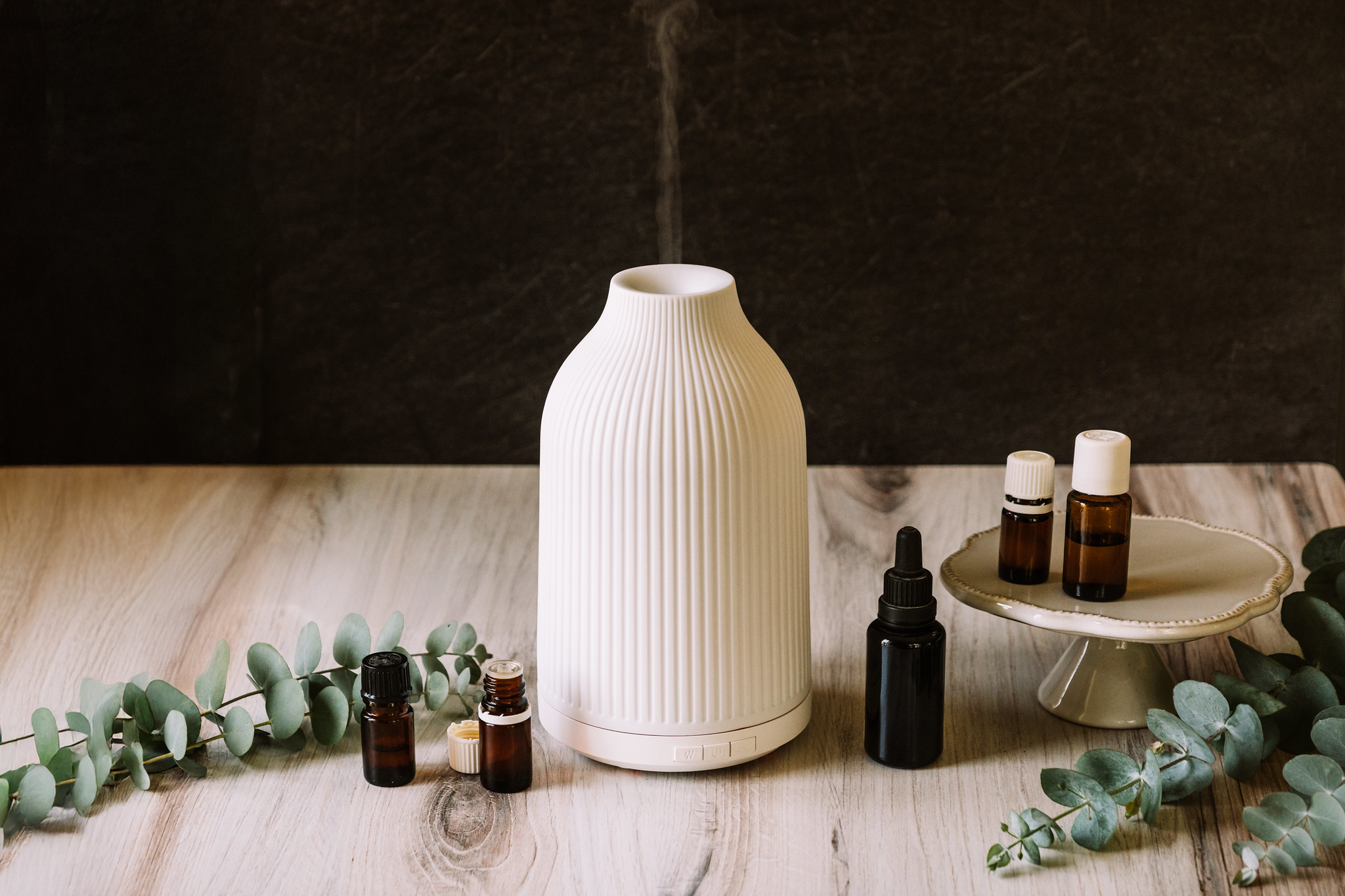
It was the winter of 2021, and ironically enough, I was putting the finishing touches on my aromatherapy case studies to become a certified aromatherapist. I was surrounded by bottles of essential oils, including custom blends I had made for various people. I wasn’t congested, my nose wasn’t blocked; however, I had a short bout of fever a few days earlier and felt pretty rundown (possibly COVID). A few days of that passed, and I felt well enough. Yet even with a bottle of peppermint essential oil held right under my nose, I registered nothing.
It was an oddly unsettling experience. Smell is something we take for granted until it’s gone. For me, the loss lasted about a week. I kept “testing” my recovery by inhaling different oils, and, just as the research suggests, that repeated exposure—called olfactory training—likely helped speed up my recovery. My sense of smell didn’t return in one dramatic moment; it came back gradually, like a radio signal slowly coming into tune. This experience got me thinking, what in the world was happening that caused me to lose my sense of smell? And clearly, I wasn’t alone in questioning the experience.
In the years since the COVID pandemic, this strange phenomenon has become all too familiar for millions of people. But out of it came something remarkable: a wave of new research into the olfactory system, its deep connection to our brain health, and the fact that our sense of smell is far more critical to our overall wellbeing—and longevity—than most of us ever realized.
The Remarkable Olfactory System
Our sense of smell is unlike any of our other senses. Vision, hearing, touch, and taste all pass through a relay station in the brain—called the thalamus—before being processed. Smell, however, bypasses that step entirely.
When you inhale an aroma, odour molecules travel into the nasal cavity and bind to specialized olfactory receptor neurons. This triggers a chemical reaction that converts into an electrical signal, sent directly to the olfactory bulb—a structure at the base of the brain that connects straight to the limbic system.
The limbic system is our brain’s emotional and memory hub, home to the amygdala (which processes emotions) and the hippocampus (which forms and retrieves memories). This is why a single whiff of lavender can relax you instantly, or why the smell of baking bread might transport you back to your grandmother’s kitchen decades ago. The connection is immediate—there’s no detour, no translation.
What’s more, our sense of smell is hardwired into our biology. Humans have hundreds of different olfactory receptor types, encoded by the most prominent gene family in the human genome. This redundancy in our genetic blueprint speaks volumes: smell is so essential to survival that evolution built it in everywhere it could.
From the moment we’re born, we have a complete set of olfactory receptors, and—fascinatingly—women tend to outperform men in smell sensitivity throughout life. But like many aspects of our health, our sense of smell can decline with age. By 65, around half of us experience some loss of smell. By 80, that number rises to about three-quarters of the population.
Why does this matter? Because research shows that losing your sense of smell isn’t just about missing aromas—it’s closely linked to changes in brain health. In fact, impaired smell is associated with reduced brain matter in the hippocampus, the very area that governs memory and emotional stability.
People with a strong sense of smell tend to live longer, healthier lives, while those who lose it prematurely face higher risks of cognitive decline and even early mortality.
Smell, Health & Longevity
We often think of our sense of smell as a pleasant—but optional—part of life. Something nice to have, but not essential. Science tells a very different story.
Research shows that our ability to smell is closely tied to our overall brain health. People with a sharp sense of smell tend to have more grey matter in key areas of the brain, especially the hippocampus, which plays a central role in memory, learning, and emotional regulation. Conversely, a diminished sense of smell is linked to a measurable reduction in brain volume—particularly in regions critical to cognitive function.
The implications are profound. Large-scale studies have found that smell impairment can be an early warning sign for neurodegenerative diseases such as Alzheimer’s and Parkinson’s—sometimes appearing years before other symptoms. In fact, olfactory testing is now being explored as a screening tool for brain health, because changes in smell sensitivity can precede noticeable memory loss.
It’s not just about predicting disease. Smell loss is also tied to shortened lifespan. Multiple studies have shown that older adults with a poor sense of smell are more likely to die within a few years compared to those who retain their olfactory abilities, even after accounting for other health factors. Scientists suspect this is partly because smell is intertwined with so many vital processes—appetite, nutrition, hazard detection (like smelling smoke or gas), mood regulation, and even immune response.
This is where post-COVID research adds an urgent layer. During the pandemic, millions experienced sudden, dramatic smell loss—sometimes for months at a time. This mass experience highlighted not only how vulnerable our sense of smell can be, but also how critical it is to our overall wellbeing. As researchers studied recovery patterns, they discovered something hopeful: the olfactory system is trainable.
The Good News — We Can Train Our Nose
One of the most exciting discoveries from post-COVID research is that the olfactory system is remarkably adaptable. Even after a significant loss of smell, many people can retrain their nose and restore function—sometimes improving it beyond where it was before.
This process is called olfactory training, and it’s surprisingly simple. It involves deliberately smelling specific scents regularly—often twice a day for several months. Studies typically use four distinct essential oils, such as rose, lemon, clove, and eucalyptus, chosen because they stimulate different olfactory receptor groups. The key is consistency. Like a muscle that strengthens with exercise, the olfactory system responds to repeated stimulation by reinforcing neural pathways and encouraging new growth.
And the benefits go far beyond just recovering smell. Neuroimaging studies have shown that olfactory training can increase grey matter volume in the hippocampus and other brain areas connected to scent processing. This means that every time you intentionally inhale a pure aroma, you’re not just enjoying the scent—you’re engaging in a form of brain training that supports memory, emotional balance, and cognitive resilience.
For many people, essential oils and aromatic plants are the easiest and most enjoyable way to integrate this training into daily life. Diffusing lavender while you read, inhaling peppermint before a workout, or breathing in the warm, citrusy notes of sweet orange in the morning aren’t just mood-lifters—they’re exercises for your brain.
The message is clear: your sense of smell is a powerful tool for maintaining mental sharpness and emotional wellbeing, and you can nurture it every single day.
Aromatherapy as Brain Training
When most people think of aromatherapy, they think of a pleasant-smelling room or a spa-like atmosphere. But aromatherapy is so much more than that—it’s a deliberate way to stimulate and strengthen your brain through your sense of smell.
Because scent has a direct line to the limbic system, inhaling certain aromas can influence mood, calm the nervous system, sharpen focus, and even support memory formation. Over time, making scent a consistent part of your daily routine acts as a form of olfactory exercise, keeping those neural pathways active and resilient.
This is where essential oils shine. Oils like lavender can promote relaxation and emotional balance, peppermint can boost alertness and mental clarity, rosemary has been studied for memory support, and citrus oils can lift mood and reduce stress. Pairing scents with specific activities—like diffusing rosemary when studying or lavender before bed—can also strengthen memory associations, making your brain more responsive over time.
A note on purity: Not all scents are beneficial. Many conventional candles, air fresheners, and perfumes contain synthetic fragrances—lab-created compounds designed to mimic natural aromas. These are not the same as pure essential oils and can actually be harmful. Studies have linked synthetic fragrance chemicals to hormone disruption, respiratory irritation, allergic reactions, and potential long-term neurological effects. If your goal is to support your brain and overall health, choose pure, natural essential oils and aromatic plants instead. If you want to read more about the harmful effects of synthetic fragrance, check out my post about that here.
Incorporating aromatherapy into your day doesn’t need to be complicated. Start with one or two scents you love, and use them intentionally—diffuse them while you work, carry a roller bottle in your bag, or simply take a few deep inhalations straight from the bottle. Over time, you’re not just enjoying the aroma—you’re actively investing in your brain health.
Practical Ways to Incorporate Aromatherapy
- Morning mood boost – Diffuse citrus oils like sweet orange, lemon, or grapefruit while you get ready for the day.
Research shows citrus aromas can stimulate serotonin and dopamine production, lifting mood and reducing feelings of fatigue (Olofsson & Wilson, 2018).
- Focused work sessions – Keep rosemary or peppermint nearby to inhale before or during mentally demanding tasks.
Rosemary has been studied for its ability to improve memory recall, while peppermint can enhance alertness and cognitive performance (MacDonald et al., 2022).
- Relaxation ritual – Diffuse lavender or chamomile in the evening, or add a few drops to a warm bath.
Lavender and chamomile both contain compounds that interact with GABA receptors in the brain, promoting relaxation and reducing anxiety (MacDonald et al., 2022).
- Mindful moments – Carry a roller bottle or personal inhaler with your favourite essential oil blend for on-the-go stress relief.
Direct inhalation stimulates the olfactory-limbic pathway, helping to regulate emotional responses in real time (Olofsson & Wilson, 2018).
- Scent pairing – Use the same scent for a repeated activity (like a bedtime routine) to strengthen memory associations.
Consistent scent pairing reinforces neural connections between aroma and behaviour, making habits easier to maintain (Olofsson & Wilson, 2018).
- Garden connection – Take time to crush and inhale fresh herbs like mint, basil, or rosemary when you’re in the garden.
Fresh plant volatiles engage the olfactory system with complex, natural scent profiles that stimulate multiple receptor types (Olofsson & Wilson, 2018).
- Pre-workout energizer – Inhale peppermint or eucalyptus before exercise to feel refreshed and alert.
Peppermint’s menthol can improve respiratory efficiency, while eucalyptus compounds can open airways and boost oxygen flow (MacDonald et al., 2022).
- Seasonal scents – Use warming spices like cinnamon or clove in a diffuser during colder months for comfort and nostalgia.
Cinnamon and clove oils are rich in eugenol and cinnamaldehyde, which can have stimulating effects on the central nervous system (MacDonald et al., 2022).
- Quick reset – Take three deep inhalations from an essential oil bottle when you feel unfocused or tense.
Fast olfactory stimulation sends immediate signals to the amygdala, shifting emotional state within seconds (Olofsson & Wilson, 2018).
- Creative inspiration – Diffuse floral or woodsy scents like jasmine, rose, cedarwood, or sandalwood while doing creative work.
Floral oils can promote dopamine release, enhancing creative thinking, while woodsy aromas tend to promote grounded focus and calm (Olofsson & Wilson, 2018).
Conclusion: Your Sense of Smell is Worth Protecting
Losing my sense of smell, even for a short time, showed me just how deeply scent is woven into daily life—not just for pleasure, but for memory, emotion, and overall health. Post-COVID research has made it clear: our sense of smell is more important than we can imagine. It’s a vital part of brain health, longevity, and emotional wellbeing.
The best news? You can nurture it. By intentionally engaging with pure essential oils and aromatic plants each day, you’re not just enjoying beautiful scents—you’re exercising your brain, strengthening neural pathways, and supporting your long-term health.
So take a moment today: pause, inhale deeply, and savour a natural aroma you love. Your nose—and your brain—will thank you.
References
Hopkins Medicine. (2023, January 10). The nose knows: Study suggests it may be wise to screen for smell loss to predict frailty and unhealthy aging. Johns Hopkins Medicine Newsroom. https://www.hopkinsmedicine.org/news/newsroom/news-releases/2023/01/the-nose-knows-study-suggests-it-may-be-wise-to-screen-for-smell-loss-to-predict-frailty-and-unhealthy-aging-1
Levinson, R., et al. (2023). The impact of COVID-19-related olfactory loss on brain health: A review. Frontiers in Neuroscience, 17, 1200448. https://doi.org/10.3389/fnins.2023.1200448
Liu, B., et al. (2020). Olfactory dysfunction predicts mortality in older adults: A meta-analysis. Aging and Disease, 11(5), 1250–1261. https://doi.org/10.14336/AD.2019.1102
MacDonald, K., et al. (2022). Olfactory training: Current evidence and future directions. Brain Sciences, 12(11), 1503. https://doi.org/10.3390/brainsci12111503
Olofsson, J. K., & Wilson, D. A. (2018). Human olfactory system: Structure and function. In H. L. Meiselman (Ed.), Handbook of Olfaction and Gustation (3rd ed., pp. 69–90). Wiley. https://doi.org/10.1002/9781119130932.ch4
Sudre, C. H., et al. (2022). Cognitive impairment in patients with persistent smell loss after COVID-19. Nature, 604, 697–707. https://doi.org/10.1038/s41586-022-04569-5
University of Chicago. (2022, July 26). Rapid loss of smell predicts dementia and smaller brain areas linked to Alzheimer’s. UChicago News. https://news.uchicago.edu/story/rapid-loss-smell-predicts-dementia-and-smaller-brain-areas-linked-alzheimers

